
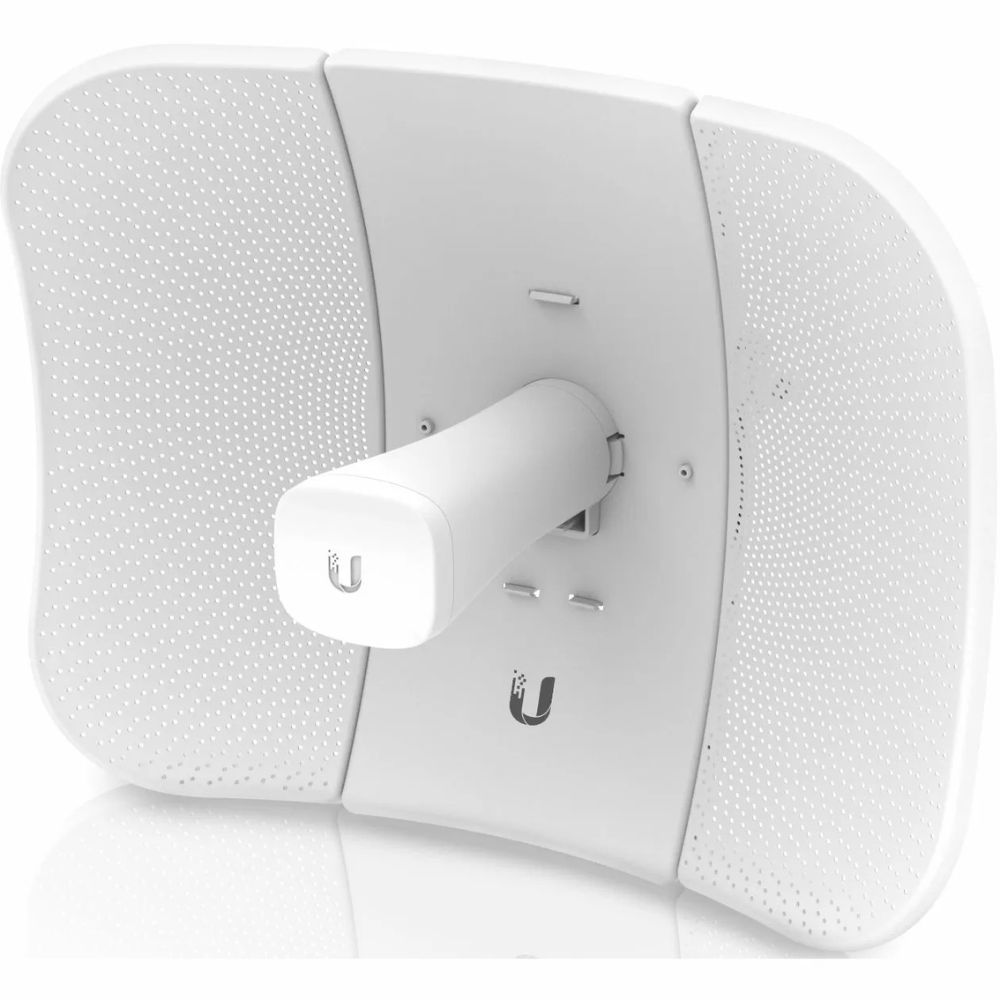
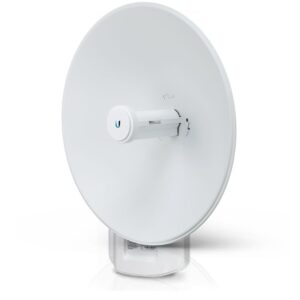
Ubiquiti airMAX LiteBeam Gen 2 5AC 5GHz 23dBi CPE
Specifications
- Operating frequency (main radio): 5,150 – 5,875 MHz (region dependent)
- Dedicated management radio (Wi-Fi): 2,412 – 2,472 MHz (or in some regions)
- Transmit power (max): ~ 25 dBm (±2 dB tolerance)
- Antenna gain: 23 dBi (directional reflector)
- Channel widths supported: PtP Mode: 10 / 20 / 30 / 40 / 50 / 60 / 80 MHz, PtMP Mode: 10 / 20 / 30 / 40 MHz
- Throughput (typical): over 450 Mbps (subject to link conditions)
- Modulation / Sensitivity: supports a variety of modulation schemes (e.g. BPSK, QPSK, QAM) with corresponding receive sensitivity down to around –96 dBm in favorable conditions
- Operating System: airOS Version 8, used across Ubiquiti’s airMAX ac product line
- Wireless Modes Supported: PtP (Point-to-Point), PtMP (Point-to-Multipoint), Mixed airMAX mode for both kinds of clients
- Dimensions: approx. 358 × 271.95 × 272.5 mm ( ≈ 14.09 × 10.71 × 10.73 in)
- Weight: Without mount: ~ 800 g (1.76 lb), With mounting hardware: ~ 980 g (2.16 lb)
- Power / PoE: Uses Passive PoE, 24 V, 0.3 A (Gigabit PoE adapter included with single-pack), Max power consumption: ~7 W, Supported voltage range: 24 V ± 10% (i.e. 22 – 26 V)
- Networking Interface: Single Gigabit Ethernet (10/100/1000) RJ45 port, which carries both data and power (PoE)
KSh 12,000.00 KSh 15,000.00
Overview & Positioning
The LiteBeam Gen 2 5AC is a Customer Premises Equipment (CPE) radio/antenna combo designed for outdoor wireless broadband connections in the 5 GHz band. It belongs to Ubiquiti’s airMAX line of products and is intended for use in point-to-point (PtP) or point-to-multipoint (PtMP) links, where one side is fixed and the device is deployed at the subscriber or remote site. The Gen 2 version brings enhancements in noise immunity, mounting, and usability over earlier models
One of the innovations is the Inner Feed technology, which embeds the radio electronics directly into the feedhorn of the reflector antenna
Key Features & Capabilities
Here are the standout attributes and capabilities you should know:
Radio / Performance
-
Operating frequency (main radio): 5,150 – 5,875 MHz (region dependent)
-
Dedicated management radio (Wi-Fi): 2,412 – 2,472 MHz (or in some regions)
-
Transmit power (max): ~ 25 dBm (±2 dB tolerance)
-
Antenna gain: 23 dBi (directional reflector)
-
Channel widths supported:
• PtP Mode: 10 / 20 / 30 / 40 / 50 / 60 / 80 MHz
• PtMP Mode: 10 / 20 / 30 / 40 MHz -
Throughput (typical): over 450 Mbps (subject to link conditions)
-
Modulation / Sensitivity: supports a variety of modulation schemes (e.g. BPSK, QPSK, QAM) with corresponding receive sensitivity down to around –96 dBm in favorable conditions
Hardware & Physical Specs
-
Dimensions: approx. 358 × 271.95 × 272.5 mm ( ≈ 14.09 × 10.71 × 10.73 in)
-
Weight:
• Without mount: ~ 800 g (1.76 lb)
• With mounting hardware: ~ 980 g (2.16 lb) -
Power / PoE:
• Uses Passive PoE, 24 V, 0.3 A (Gigabit PoE adapter included with single-pack)
• Max power consumption: ~7 W
• Supported voltage range: 24 V ± 10% (i.e. 22 – 26 V) -
Networking Interface: Single Gigabit Ethernet (10/100/1000) RJ45 port, which carries both data and power (PoE)
-
Environmental / Mechanical:
• Operating temperature: –40 °C to +70 °C (–40 to 158 °F)
• Operating humidity: 5% to 95% non-condensing
• Wind survivability: up to 200 km/h (125 mph)
• Wind loading: ~275 N at 200 km/h (~61.8 lbf)
• ESD / EMP protection: ± 24 kV (contact and air)
Mechanical & Mounting Design
-
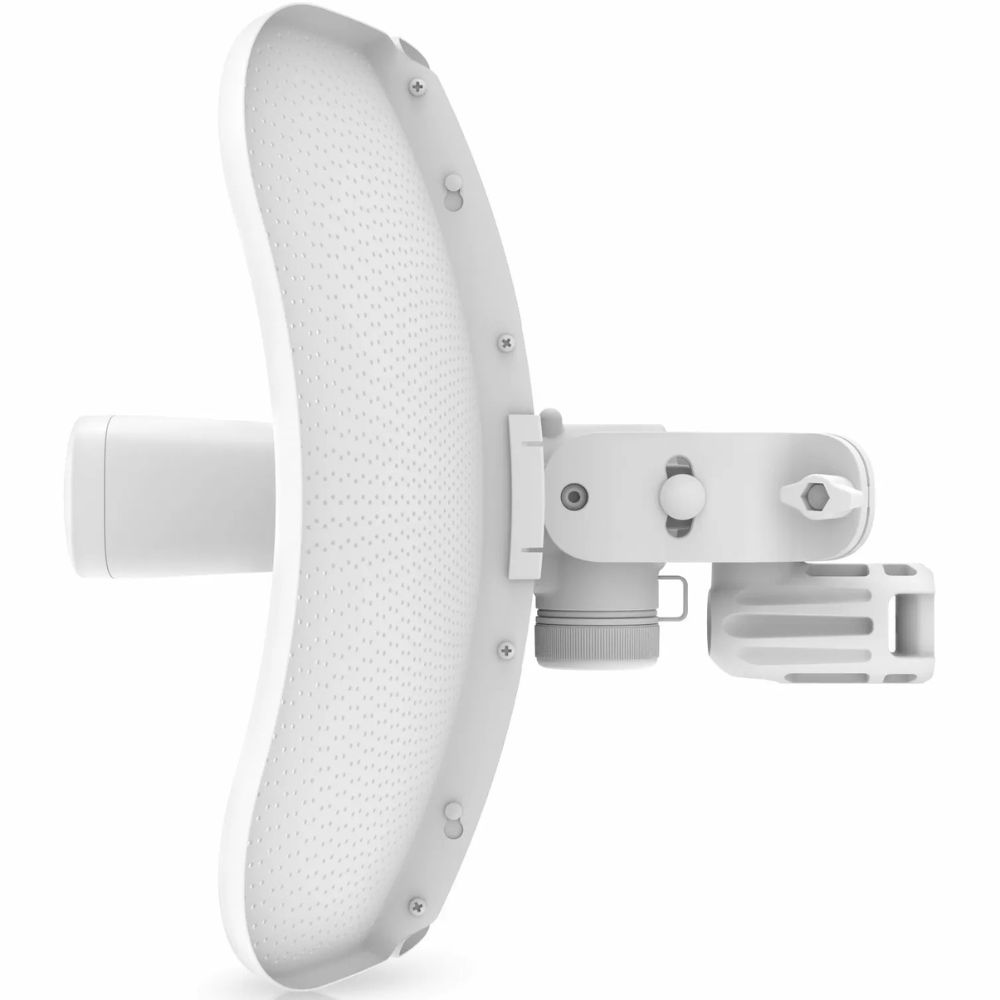
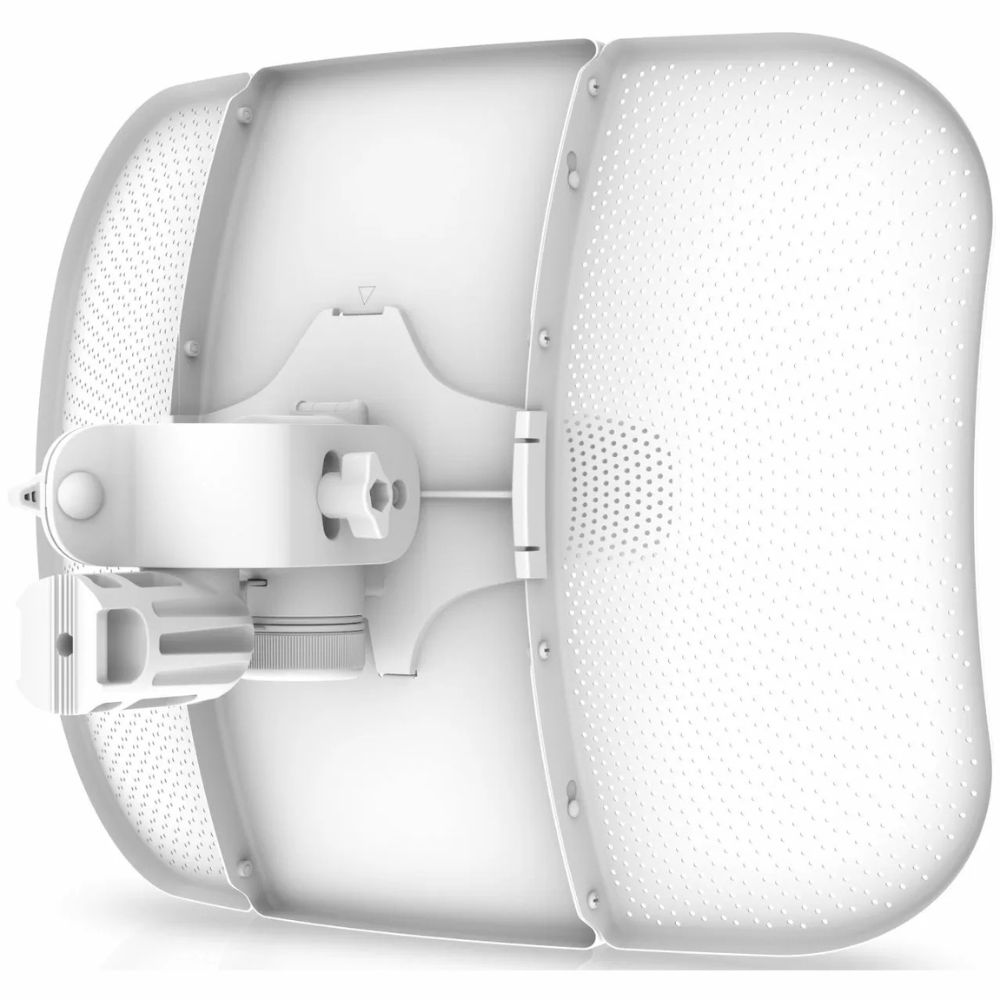
Uses a two-axis mount system so you can adjust both azimuth and elevation separately for fine alignment
-
Has a built-in bubble level to assist with alignment in field installations
-
The kit includes parts like side reflectors, feed, mounting strap, wingnut hardware, etc
-
Designed for quick assembly and deployment with minimal tools (often just a wrench)
Software, Management & Protocols
-
Operating System: airOS Version 8, used across Ubiquiti’s airMAX ac product line
-
Wireless Modes Supported:
• PtP (Point-to-Point)
• PtMP (Point-to-Multipoint)
• Mixed airMAX mode for both kinds of clients -
Advanced Features & Tools:
• Automatic channel selection to reduce interference
• Transmit power control (automatic or manual)
• Dynamic ACK timing / distance selection (important for long links)
• Detailed RF diagnostics, spectrum analysis (airView®), and link monitoring tools
• airMagic channel selection tool (for optimizing channel usage) -
Management / Setup via Mobile:
Because of the integrated management radio, you can use a mobile app (e.g. Ubiquiti’s UMobile / UISP) to connect to the device, configure it, view status, update firmware, and perform diagnostics without disrupting the main link. -
Security: Supports WPA2 encryption (AES) and standard best practices for wireless authentication
Benefits & Trade-offs
Advantages
-
High gain in compact form: 23 dBi directional gain gives good reach for relatively small, lightweight hardware.
-
Reduced signal loss: Inner Feed design eliminates separate feed cables, thereby reducing insertion/cable loss.
-
Good interference and noise immunity: Because of tighter beamwidth and directional pattern, it rejects off-axis noise sources better (i.e. spatial filtering)
-
Ease of installation and alignment: Two-axis mount, bubble level, and quick assembly make field deployment simpler.
-
Robust: Operates over wide temperature and humidity ranges, and can survive strong winds.
-
Independent management radio: Configuration and management don’t interfere with the data link.
-
Modern features: Full support for wide channel widths, adaptive features, diagnostics, and advanced firmware features.
Potential Limitations / Considerations
-
Requires precise alignment: Being highly directional, misalignment is more punishing than with wide-beam antennas.
-
Line-of-sight (LOS) required: As with many outdoor wireless links, obstructions (trees, terrain) severely degrade performance.
-
Performance depends on environment: Throughput of “450 Mbps+” is in ideal conditions; real world experience may be lower depending on interference, distance, weather, etc.
-
Passive PoE limitations: Voltage drop over long cable runs may matter; ensure proper cable gauge and voltage considerations.
-
Regulatory constraints: In different countries, the allowed transmit power and channels in the 5 GHz band may vary; you must configure to comply with local laws.
-
Wind and physical stress: While rated for strong winds, prolonged exposure or storms may stress mounting hardware; good mounting design is essential.
Use Cases & Deployment Scenarios
Here are some typical environments where the LiteBeam Gen 2 5AC is often used:
-
Wireless ISP (WISP) subscriber link (CPE): The device can be mounted on a customer’s roof or pole and connected via Ethernet indoors.
-
Backhaul / bridging: As part of a point-to-point backhaul link between two sites.
-
Rural connectivity: For remote areas where wired infrastructure is expensive; this can bridge distances between base stations and dispersed users.
-
Enterprise / campus deployments: To connect outbuildings, remote offices, or across parts of a campus without trenching fiber.
Because it supports both PtP and PtMP, it’s flexible in network architecture
Based on 0 reviews
Be the first to review “Ubiquiti airMAX LiteBeam Gen 2 5AC 5GHz 23dBi CPE”
Related products
-
Access Points, TP-Links
TP-Link AC1200 Wireless MU-MIMO Gigabit Indoor/Outdoor Access Point
Specification
- Interface: 1 x Gigabit Ethernet (RJ-45) Port (supports 802.3af/at PoE and Passive PoE)
- Power Supply: 802.3af/at PoE or 24V Passive PoE (PoE adapter included)
- Power Consumption: 10.5W
- Antenna: 2.4 GHz: 2× 3 dBi, 5 GHz: 2× 4 dBi (detachable antennas)
- Weatherproof Enclosure: IP65 rated
- Mounting: Pole/Wall mounting kits included
- Dimensions: 1.8 × 1.1 × 8.5 in (46 × 26.7 × 214.9 mm)
- Concurrent Clients: Supports 220+ clients
- Wireless Standards: IEEE 802.11a/b/g/n/ac
- Frequency: 2.4 GHz, 5 GHz
- Signal Rate: Up to 867 Mbps on 5 GHz, up to 300 Mbps on 2.4 GHz
- Wireless Functions: MU-MIMO, Beamforming, Band Steering, Airtime Fairness, Load Balance, Seamless Roaming, Omada Mesh
- Wireless Security: Captive Portal Authentication, Access Control, MAC Address Filtering, SSID to VLAN Mapping
- Protocols: IPv4, IPv6
- Operating Humidity: 10–90% RH non-condensing
- Certifications: CE, FCC, RoHS
SKU: n/a -
Access Points, TP-Links
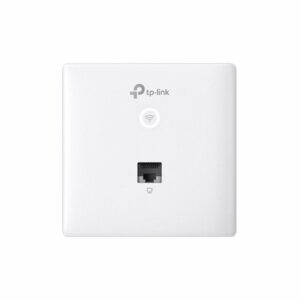
TP-Link 300Mbps Wireless N Wall-Plate Access Point
- Wireless Standards: IEEE 802.11n/g/b
- Frequency: 2.4GHz
- Signal Rate: Up to 300Mbps
- Transmit Power: Up to 20dBm
- Interface: 1 x 10/100Mbps Ethernet Port (RJ45)
- Button: Reset
- Power Supply: 802.3af PoE or 48V Passive PoE (PoE Adapter Included)
- Power Consumption: 4.3W
- Antenna Type: Internal Omni
- Mounting: Wall Plate Mounting
- Dimensions : 3.2 × 1.8 × 4.8 in (82.6 × 45.2 × 121.9 mm)
SKU: n/a -
Access Points, Ubiquiti
Ubiquiti airMAX PowerBeam 5AC Gen2
Specifications
- Power Supply: 24V, 0.5A Gigabit PoE Adapter
- Power Consumption: 8.5W
- Power Method: Passive PoE
- Supported Voltage Range: 20 to 26VDC
- Networking Interface: 10/100/1000 Ethernet Port
- Processor Specs: MIPS 74Kc
- Memory: 64MB
- LEDs: Power, Ethernet, (4) Signal Strength
- Mounting: Pole-Mounting Kit (included)
- Wind Loading: 380N @ 200km/h
- Wind Survivability: 200km/h (125mph)
- Operating Temperature: -40 to 70°C (-40 to 158°F)
- RoHS Compliance: Yes
- Vibration Test: IEC 68-2-6
- Temperature Shock Test: IEC 68-2-14
- UV Test: IEC 68-2-5 at 40°C (104°F), Equivalent: ETS 300 019-1-4
- Wind-Driven Rain Test: ETS 300 019-1-4, Equivalent: MIL-STD-810 G Method 506.5
- Certifications: CE, FCC, IC
- Dimensions: 420 x 420 x 230mm
- Weight: 2.22kg
SKU: n/a -
Access Points, TP-Links
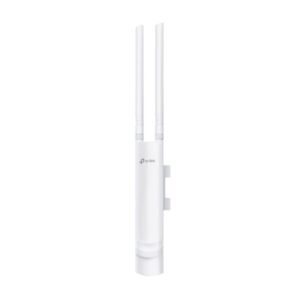
TP-Link 300Mbps Wireless N Outdoor Access Point
specification
-
Speed: Up to 300 Mbps wireless speed (802.11b/g/n).
-
Frequency: 2.4 GHz band.
-
Antenna: Built-in 9 dBi directional antenna.
-
Range: Designed for long-distance links up to ~5 km in ideal line-of-sight conditions.
-
Modes: Access Point, Client, Bridge, Router, WISP mode.
-
Power: Passive PoE (power over Ethernet) up to ~60 m cable.
-
Outdoor design: Weather-resistant enclosure (IP-rated).
- Interfaces: 1× Fast Ethernet (RJ-45) Port (Support Passive PoE) interface
SKU: n/a -
-
Access Points, TP-Links
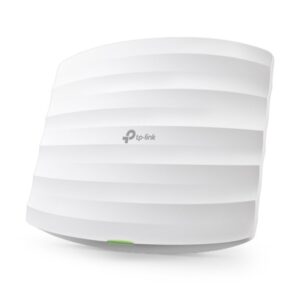
TP-Link 300Mbps Wireless N Ceiling Mount Access Point
Specifications
- Wireless Standards: IEEE 802.11n/g/b (2.4 GHz)
- Speed: Up to 300 Mbps (2.4 GHz only)
- Ethernet Port: 1 × 10/100 Mbps RJ45 (Passive PoE supported)
- Antennas: 2 × internal omnidirectional antennas
- Mounting Options: Ceiling or wall mount
- Security: WPA/WPA2/WPA3-Personal & Enterprise, 802.1X authentication, SSID-to-VLAN mapping
- Guest Network: Yes, with Captive Portal support
- Management: Omada SDN, Controller, Web UI, CLI
- Power Supply: Passive PoE
- Power Consumption: Max 4.3 W
- Operating Temperature: 0 °C ~ 40 °C
- Dimensions: 180 × 180 × 47.5 mm
SKU: n/a
There are no reviews yet.